After a career in horticulture, Julie Buttigieg now focuses on her own garden and the results are magnificent
Text and photos by Lisa Steinkopf
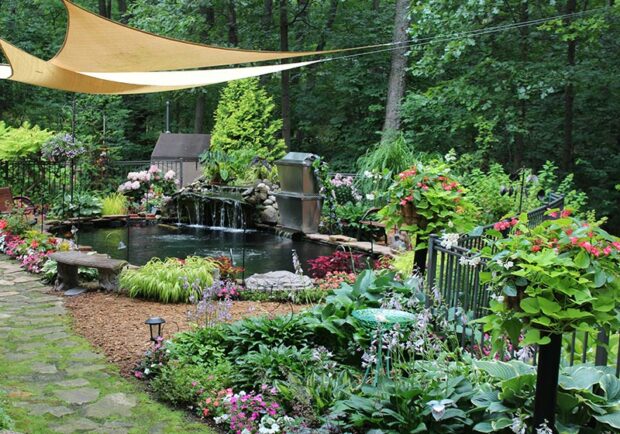
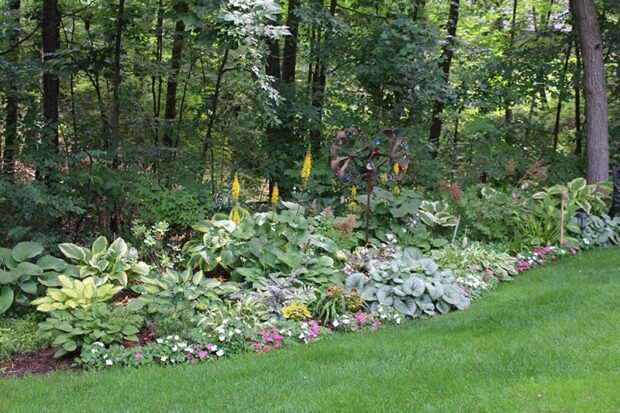
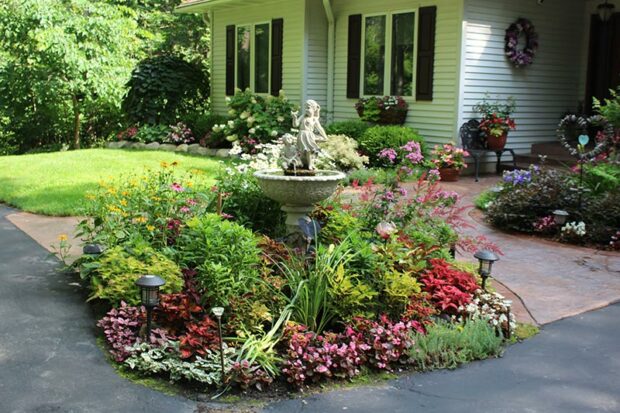
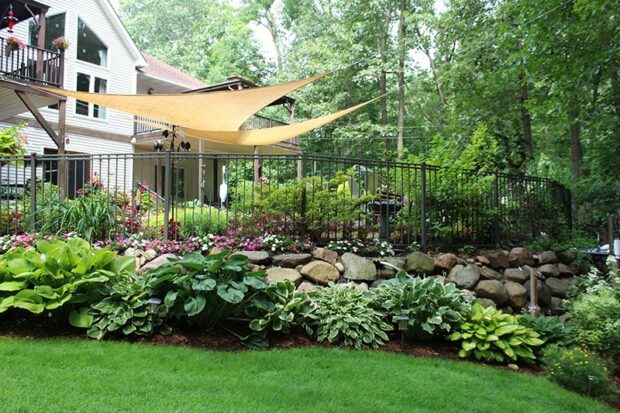
As you drive by the Buttigieg home, it only takes one glance to know a serious gardener lives there. Yet the front yard is just a hint of what the back garden holds. On this three-acre property, there is not only an extensive fairy garden and hundreds of hostas, but also a roughly 16,000-gallon koi pond. What’s even more amazing: in 2015 none of it existed except the front yard cherry tree. Two years later in 2017, the garden was on its first garden walk.
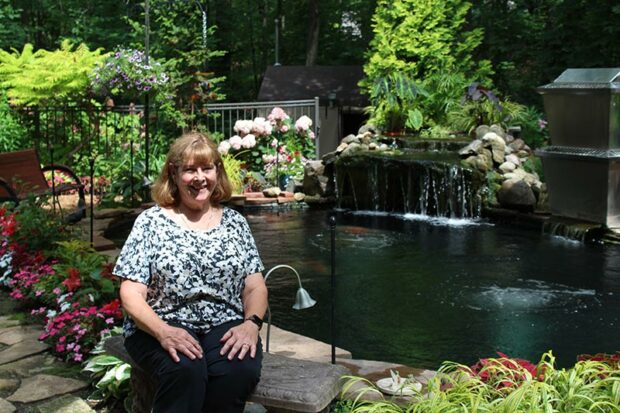
Let’s start at the beginning of Julie Buttigieg’s journey in horticulture. She attended Michigan State University where she studied floriculture. From there she landed a job at Weber Brothers Greenhouses, where she worked until it closed when I-696 was built. Originally from Dearborn, her mom told her about an employment ad for a horticulturist at Greenfield Village. That was 1977. Julie ended up working at Greenfield Village for 38 years, retiring in 2015. Mom knows best, right?
It was originally a florist position, making flower arrangements for different areas in the village and banquets held there. She was also an assistant in the greenhouse, planting window boxes and hanging baskets, and caring for the gardens around the planters. Julie also taught adult education classes, including wreath making, table centerpieces, and Christmas décor. In the early 1980s when the greenhouse manager retired, Julie took over and oversaw all the containers and gardens in the village, including growing the plants for them.
A progression of ponds
Julie and her husband lived in Livonia until 2015. They had a koi pond there—I remember visiting the garden on pond tours in 2012 and 2014. Their garden also had been on the Livonia garden walk in 1998 and 2002. At that time, their yard wasn’t particularly large and was filled with a swing set and sandbox for many years for their young son. When those playthings were no longer needed, building a pond became Julie’s focus.
She started small with a 300-gallon pond. When that became too tight, she moved up to 1,500 gallons. Then that became a 6,000-gallon pond, which was still too cramped—the growing fish were knocking the plant pots off the underwater shelves. The new 8,500-gallon pond had no shelves, so the plants couldn’t be knocked over. Then with retirement, Julie and her husband decided to move to a larger piece of property in Fenton. Happily, the new owners of their Livonia home kept the pond and have also been on the pond tour.
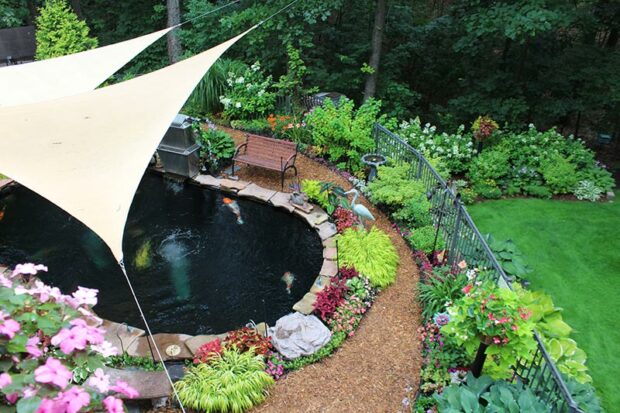
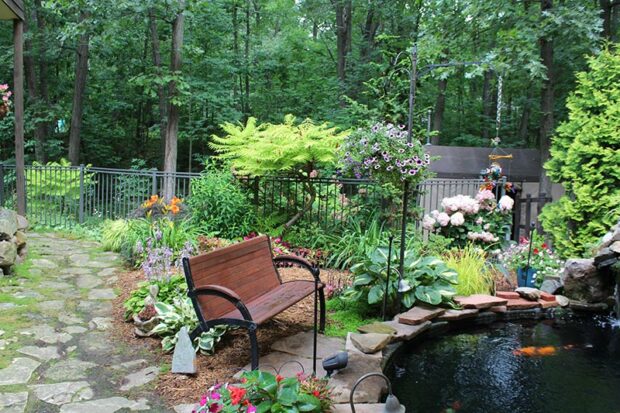
When the Buttigiegs decided to move to a new house, they built the pond first to move their koi, which are now 18 to 20 years old and up to 38 inches long. They bought the new house in October 2014, but didn’t move in until the next July when the pond was finished. The koi are much loved pets and the couple wanted to be sure the fish had a new home to live in before the move. Amazingly, these fish can live 60 to 80 years.
This also gave the Buttigiegs time to dig up and divide the perennials in their previous garden and bring them to the new property. As far as the new pond goes, it is seven feet deep and holds 15,800 gallons of water. It is a long way from the 300-gallon pond Julie started with. There are drains and aerators to take the waste out and filter the water (using a bakki tower system). During winter the fish stay in the pond, which is covered. The water temperature is lowered slowly to 48 degrees starting in October and then gradually warmed back up starting in March. The fish rest and eat nothing for about two months of the year.
Plants and collections
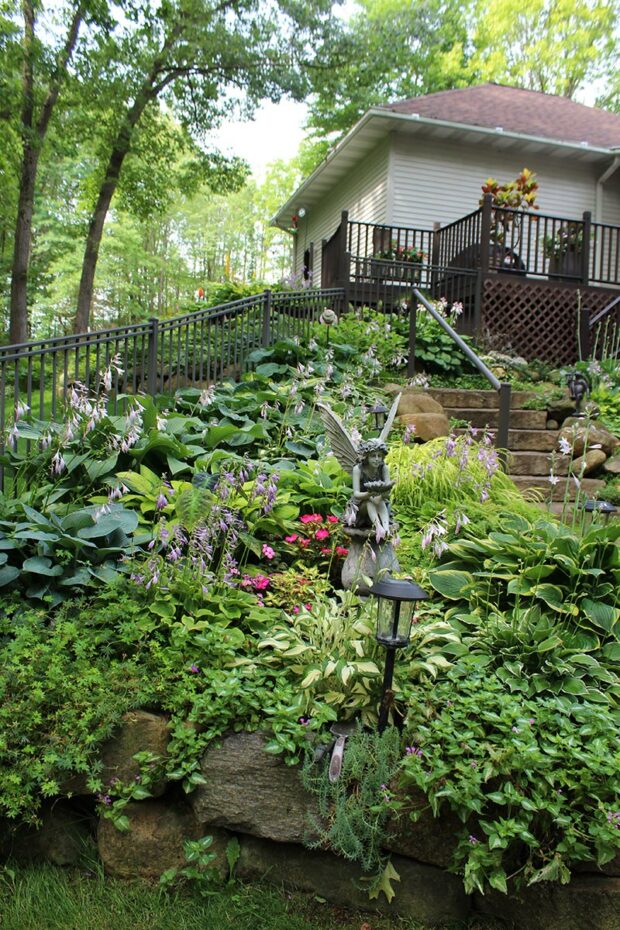
Another collection that moved from Livonia to their new garden was an extensive fairy garden. A castle is the focal point and was the piece that turned Julie on to fairy gardening. The current fairy garden is much larger than before and includes many small vignettes. The large house and castle stay outside all winter, but the rest is put away—a big job.
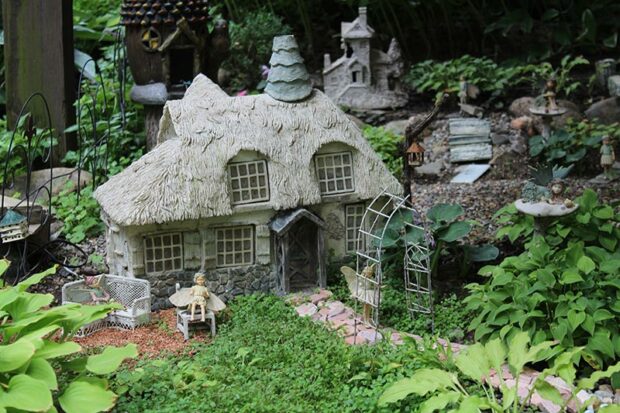
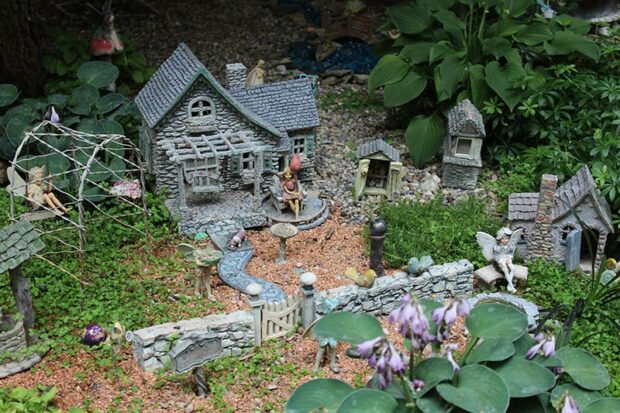
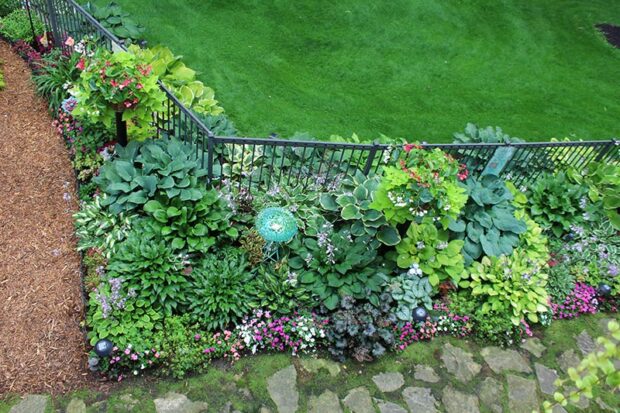
When they chose this property, it was bare and hilly, so the Buttigiegs hired professionals to do some hardscaping. They had the pond dug, a fence installed around the pond, and stone steps and a patio constructed. Two large boulder walls were built to make level areas for the patio and the area around the pond. Then Julie filled the garden with lovely perennials, shrubs, and annuals. The garden became her new full-time job; she now loves working in her own garden.
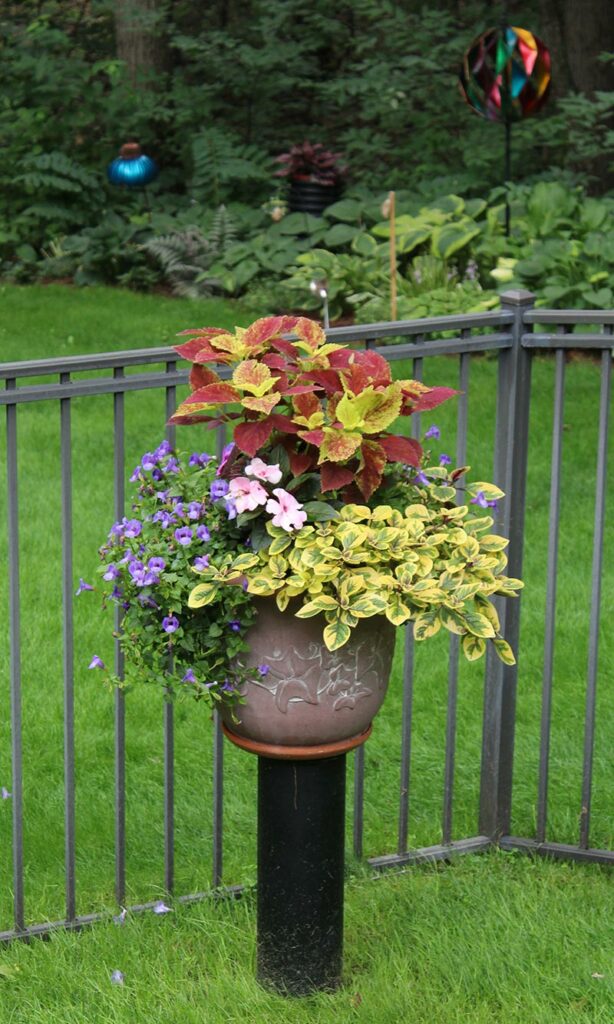
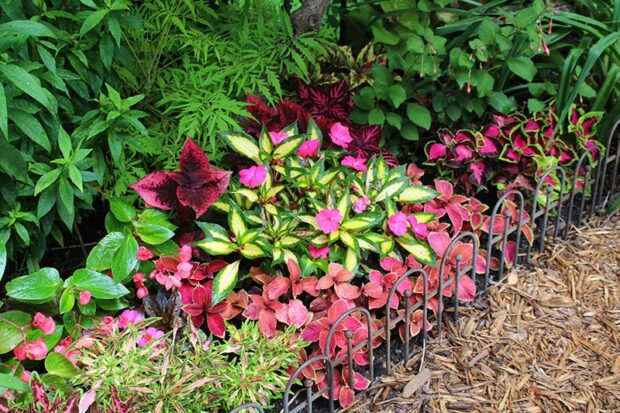
One of her favorite plants is coleus—she has collected over 75 varieties. Julie takes cuttings of each one every fall and grows them under lights in her basement. She nurtures 10 flats of coleus cuttings, which amounts to 320 plants. She also has a fuchsia called ‘Billy Green’ that she has taken cuttings from and overwintered for 20 years. Julie also overwinters the Rex begonias she grows in pots in the mixed border.
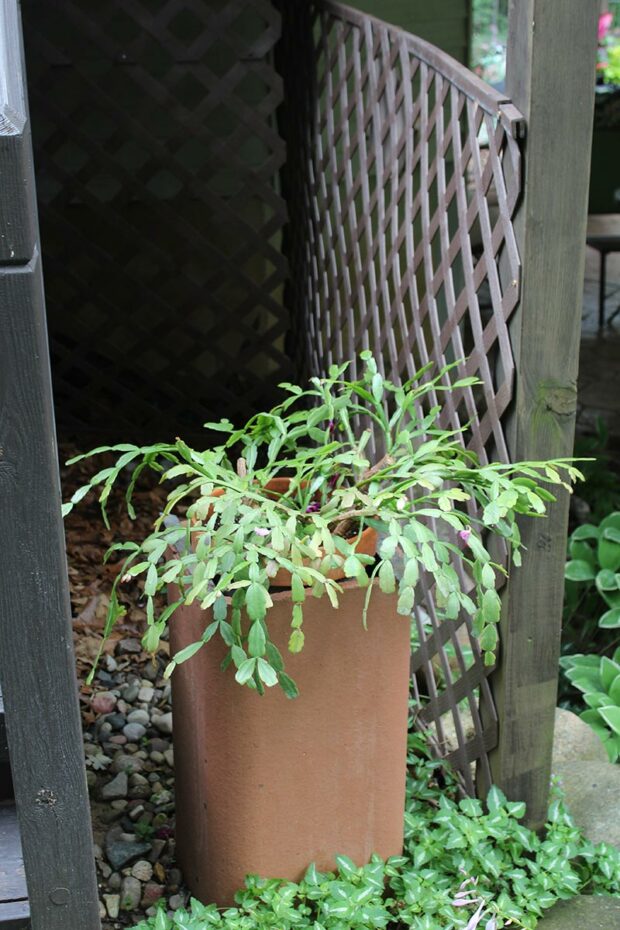
Her third-generation Christmas cactus goes outside for the summer. This special plant belonged to her grandmother. Julie’s mom then took it to her schoolroom for many years, but after she retired, Julie inherited the plant and has now enjoyed it for over 20 years. I love family plants and the stories behind them.
Repelling the deer
On the Buttigieg property, one of the notable things was the lack of chewed plants by the deer. We all know hostas are deer magnets and Julie’s garden has hundreds of them. So, of course, I asked her secret. It is an intensive regimen that includes Bobbex animal repellent, Milorganite, and Green Screen deer and rabbit repellent. She uses all three deterrents to keep those pesky herbivores away. Milorganite, a granular “aromatic” fertilizer, is scattered in the garden every week like chicken feed. Maybe that’s one of the reasons her plants are so beautiful. She also sprays Bobbex every 7 to 10 days if it is rainy or twice a month if it is drier, as it eventually washes off. She uses over six gallons each time. And lastly, she hangs Green Screen in small bags on hooks around the garden. This regime seems to work, as I saw not one nibbled plant.
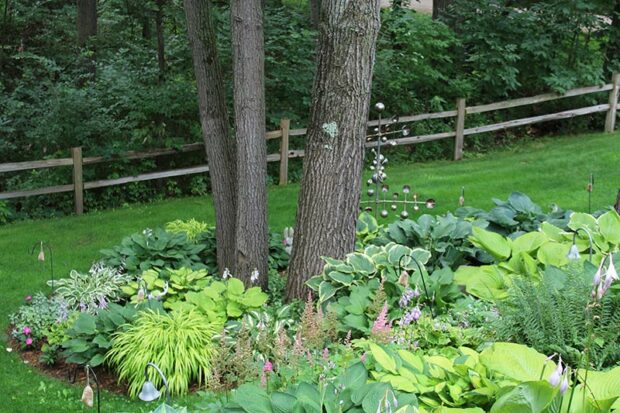
I also noticed the absence of mosquitoes. While Julie doesn’t spray for them, the homeowner’s association does. She requested that they not spray her garden, and they honor that, but the spray around the perimeter seems to work. Julie uses no insecticides or herbicides. She has dogs and, of course, fish, so her yard cannot be sprayed. If sprays landed in the pond, they could kill the fish.
This amazing garden filled with gorgeous plants, fanciful fairies, and mature fish is not to be missed. Julie, a member of the Open Gate Garden Club, works in the garden 10 to 12 hours a day in the spring and 2 to 3 hours daily in the summer. This is a well-tended garden, and it shows!
Lisa Steinkopf is The Houseplant Guru (www.thehouseplantguru.com).